 AI Models Company
Build an Instagram plan around an audience, a reason to follow and a few formats you can produce repeatedly. Keep a record of what you publish, the response and the work involved. Use that record to decide what to continue or change.
There is no schedule that guarantees reach. The fictional account below shows how to turn a character idea into a monthly plan you can measure and adjust.
Give the account a clear purpose
A character needs something to do beyond appearing in pictures. Write one sentence that connects its content with an audience: “An original fictional adult photographer shares street-composition ideas for beginners.”
That sentence helps you choose scenes, captions and topics. It also gives you a way to reject ideas that do not fit. Define the character’s voice, interests and backstory so the account feels consistent from one post to the next.
For official account-specific guidance, Instagram describes its Best Practices education hub in the professional dashboard. Use the guidance available to your account and its own metrics rather than assuming a general schedule is an algorithm rule.
Two formats, shown
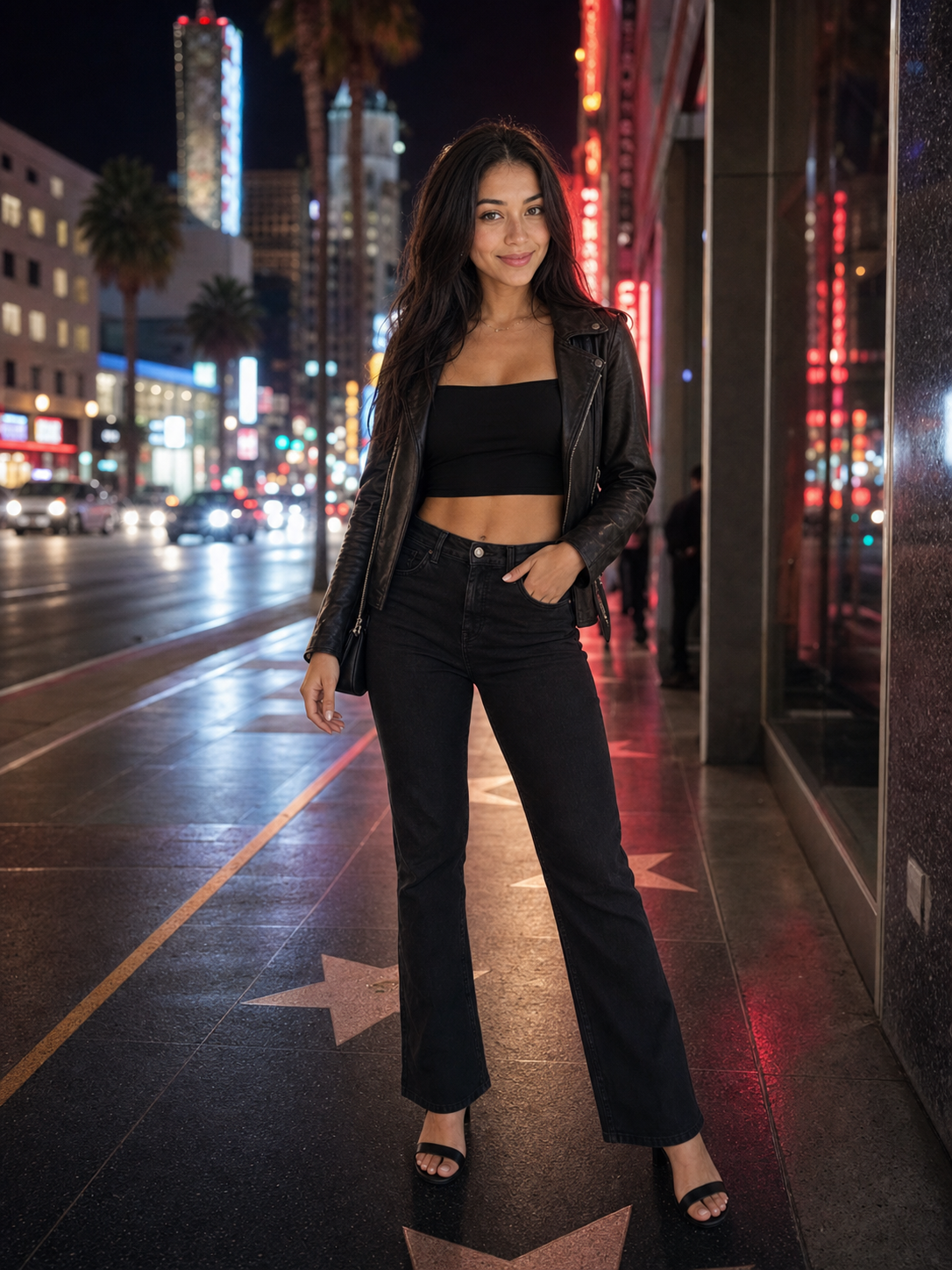
Formats are the repeatable shapes your posts take. The images below are examples from our public gallery; use them to picture two different shapes you could produce instead of only portraits.

A worked character plan
The following example is invented for this guide.
| Field | Example decision |
|---|---|
| Character | Mara, an original fictional adult photographer |
| Audience | People learning to compose street photos |
| Voice | Plain explanations, short captions and a curious tone |
| Interests | Framing, light, everyday objects and visual storytelling |
| Boundary | Generated scenes are not presented as records of actual visits |
| Production constraint | Two posts per week within a fixed four-hour production budget |
| First question to test | Do readers respond to composition explanations or scene stories? |
Fit the schedule to your production time. If the content takes longer, plan fewer posts or simplify the format.
Choose repeatable formats
For Mara, three possible formats are a generated scene with one composition tip, an explanation of how a reference shaped an image, and a short fictional scene story clearly labeled as such.
These formats serve different purposes. A tip may attract saves. A process explanation may generate workflow questions. A story may encourage conversation about the character. Decide which response would be useful before publishing.
The creation guide covers the identity assets. The prompt library helps prepare reusable scene instructions.
An illustrative four-week plan
The plan below is a two-week cycle repeated. Week 5 would repeat week 1 with the change you chose in week 4.
| Week | Work | Question | What to record |
|---|---|---|---|
| 1 | Prepare references and two formats | Can both formats be produced within the budget? | Attempts, editing and total hours |
| 2 | Publish the two formats | What questions or useful responses appear? | Reach, saves, replies and profile visits available in the account |
| 3 | Repeat with comparable topics | Does the response repeat or look like a one-off? | The same metrics and production effort |
| 4 | Review and choose the next small change | Which format deserves another round? | Reasons for keeping or changing it |
This is observational planning, not a randomized experiment. Posting time, topic, audience composition and distribution can change. A small set of posts cannot establish that one format caused growth.
Run the publishing routine
Work through these steps each cycle rather than improvising. Tick them as you go; the list is generic, so edit it to fit your formats.
Log enough to learn
| Field | Your record |
|---|---|
| Date and post link | |
| Format and intended audience response | |
| References and prompt version | |
| Production time and paid costs | |
| Metrics available at a consistent review interval | |
| Relevant audience questions | |
| What changed from the previous post | |
| Next decision |
Compare posts over the same observation window where possible. Avoid comparing one post’s first hour with another’s full month. Do not judge success only by follower count if your goal is inquiries, useful discussions or visits to an offer.
Keep disclosure and business goals separate
Follow the relevant AI-content and commercial disclosure rules. An AI note in the profile is useful context, but it does not replace post-level requirements.
If you plan to earn from the account, identify the offer and customer separately. Reaching more people is not itself proof that a subscription, affiliate offer or service will sell. The monetization guide gives a worksheet for that decision.
Common questions
How often should I post?
Choose a schedule you can produce, review and sustain. Use your own account information and current platform guidance when revising it.
What if one post performs well?
Record what happened and try a comparable follow-up. Do not build an entire growth claim around a single result.
What if nothing improves?
Revisit the audience, offer, format and production effort. Change a specific assumption, document it and set another review point.